

Why knowledge should move.
There is knowledge sitting everywhere. It is sitting inside organizers who know how to turn ten volunteers into one hundred. Inside canvassers who know how to have conversations that actually move people. Inside community leaders who know why residents keep showing up for one thing and not another. Inside technologists who know how to make the work faster. Inside organizations that have spent years figuring out what works and, just as importantly, what doesn’t.
Sy Moore
Founder, Street Angels, LLCToo much of that knowledge stays with the person who learned it, and we want it moving. Street Angels Institute creates a place where practitioners can turn experience into knowledge other people can use, where peers can teach peers, where emerging leaders can develop real competency, where thought leaders can build and test their ideas, and where communities can benefit from all of it, because expertise becomes more powerful when somebody else can use it.
Expertise becomes more powerful when somebody else can use it.
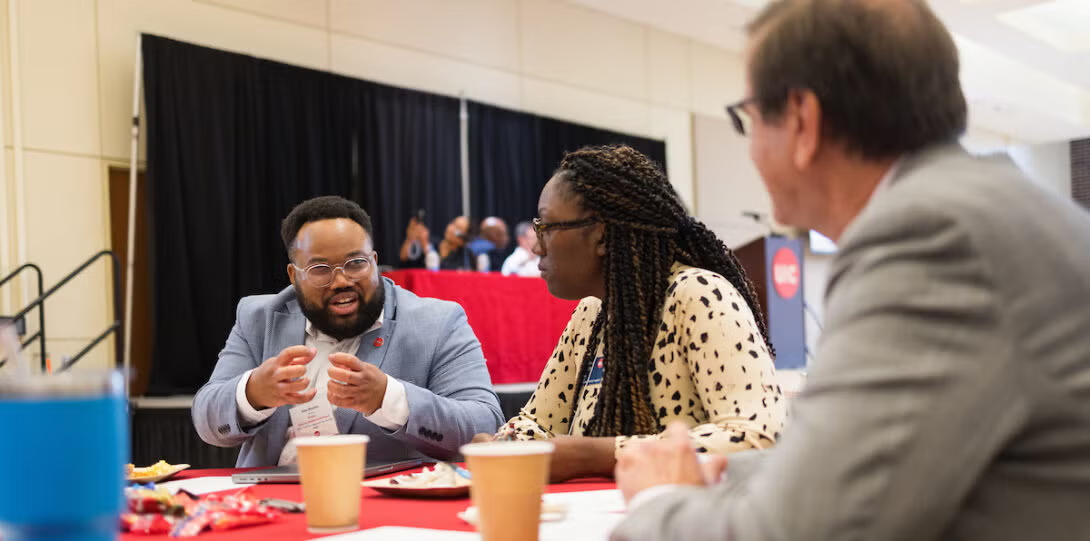
We solve the gaps between knowing and doing.
A lot of people doing community, civic, political, nonprofit, and movement work are not short on commitment. They are short on infrastructure. They are trying to recruit people without a recruitment system. They are trying to mobilize communities without reliable data. They are running organizations without enough trained people. They are trying to build coalitions without a process for collaboration. They are collecting information they do not know how to analyze. They are trying to fund work without being funding-ready. They are bringing in volunteers without knowing how to retain or develop them. They are solving the same problems other organizations have already solved because the knowledge never traveled.
The gaps we are here to close
At the same time, people trying to enter these fields face another problem. They can learn the theory but cannot get the experience. They can complete training but still cannot demonstrate that they can do the work. They can have talent without access to the people, projects, communities, and opportunities that would allow that talent to become expertise.
01
Experience shouldn’t require experience.
There is a broken loop we want to interrupt. You need experience to get the opportunity, but you need the opportunity to get experience. Street Angels Institute gives people another way in. Work on something real: research a community problem, build a field strategy, develop a volunteer system, analyze data, design a mobilization campaign, help an organization understand why something isn’t working, build a dashboard, test a message, map a community, or develop a technology solution. Do the work, then leave with more than a certificate saying you learned about it. Leave with evidence that you can do it.
02
What we believe
Learning should be incremental, not overwhelming. Measurable, not vague. Problem-based, not theoretical. Applied, not abstract. Peer-powered, not top-down. And connected to real communities, not delivered to them from somewhere else. We don’t think education and capability are the same thing. Knowing more and being able to do more are two different problems, and most institutions only solve the first one. We built this one to solve the second.
03
Where the Institute comes from
Street Angels Institute is built by Street Angels, in partnership with Civitics and The Missing Middle, organizations that share the same conviction: that the people closest to a problem should have more power to move it, not less. We’re building room for more participating community organizations, coalitions, and future partners who believe the same thing. If that’s you, there’s a place for you in this.
04
And then we connect the dots.
Everybody who enters Street Angels Institute brings something with them: something they know, something they need to know, something they’re trying to do, or something they’re trying to solve. That creates an opportunity bigger than education. We can begin connecting the person who knows with the person who needs to know, the organization with the problem to the people developing the skills to work on it, the emerging practitioner with an opportunity to gain experience, the thought leader with people ready to learn their methodology, and communities experiencing the same problem with one another.
Over time, we don’t just have a learning network. We have a capability network: a growing picture of who knows what, who needs what, who is working on what, what communities are confronting, what people are trying, and what is actually working.